Threads are an important element of sewing. If they are of high quality and properly matched with the fabric and sewing technique, then the piercing of the fabric will be correct.
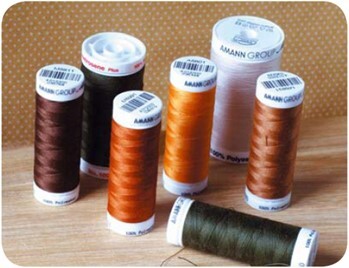
Quality and Thickness of Threads
The most important task is to find the right thread for the needle and the fabric you are using. Threads for machine sewing differ from threads for handwork: they are more durable, made with consideration for the tension that the sewing machine will subject them to.
Choosing the right thread is primarily about selecting threads suitable for a specific task: simple sewing, finishing sewing, embroidery, etc. Each brand has different sets of threads depending on their purpose. We also talk about the correct choice of thread thickness: the thicker the fabric, the stronger and more durable the threads should be. The thickness of the threads is indicated by a number: the larger the number, the thinner the threads (threads no. 50 - medium thickness).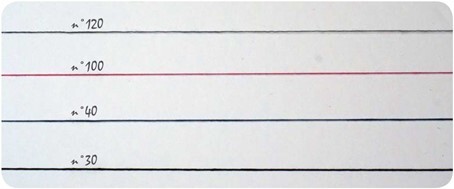
Threads of various thickness
How to Determine Quality Threads?
The quality of threads is determined by uniformity: the smoother and more even the thread, the fewer fibers on it, the higher the quality of the threads. High-quality threads do not break, they are easy to use, and adjusting the upper thread tension is simple with them.
At the top is a quality thread: the thread is straight.Below is a medium quality thread: you can see curled fibers. Be sure to buy quality threads, even if they are a bit more expensive. This will allow you to avoid unpleasant surprises and spend less time setting up the machine while sewing.
Types of Threads and Selection Criteria
Threads should be selected based on their purpose: threads for all fabrics (universal) are suitable for most sewing tasks and light household textiles. They are made of polyester or cotton.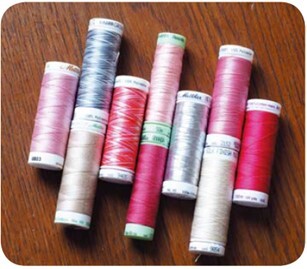
Different Types of Embroidery Threads
Threads can be:
- Natural (from cotton, silk)
- Synthetic (from polyester, nylon, viscose)
Cotton threads are usually used for working with thin fabrics made from natural fibers (cotton, linen). They are easily commercially available, are less durable than the same threads made from polyester, and are not suitable for working with leather. There are threads made from regular cotton and threads made from mercerized cotton. The second option is better – the threads are more even and durable.
Polyester threads are suitable for most techniques and materials, especially for working with synthetic fabrics. These threads are strong and slightly elastic, they do not shrink and are therefore less expensive than cotton threads. When sewing at high speed, they work great, and if your machine's settings aren't perfect, it will be much less noticeable with polyester thread than with natural fiber thread. And yet, when working with thin and natural fabrics, it is better to use cotton threads: polyester threads are too strong for such materials and the fabric may break due to strong tension, while the threads will withstand it.
According to their purpose, threads are divided into:
- Basting threads. They tear easily because they are designed for temporary stitches and marking, and therefore should be easily removed from the fabric.
- Silk threads are designed for working with delicate fabrics made from silk and wool. These are thin and strong threads with a beautiful natural sheen. They are often used for embroidery, they have a good glide. However, they can be replaced with cheaper polyester threads.
- Threads for quilting (twisted or super strong) can be made from silk, but recently they are increasingly made from polyester. Very strong threads are used for quilting, sewing buttonholes on heavy fabrics, and sewing on buttons.
 ;;
;;
Coils of mercerized cotton, polyester, silk, quilting threads
- Special threads (elastic, invisible, fusible, water-soluble, for gathering, for bobbin thread in embroidery) have a specific purpose.
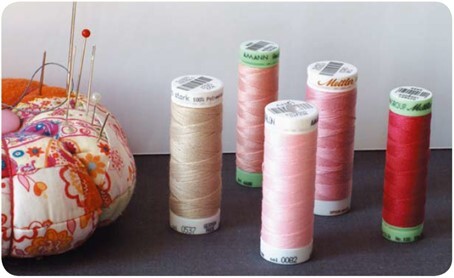
- Threads for embroidery and decorative stitches (metallic, variegated, rayon, fluorescent, textured) are varied.
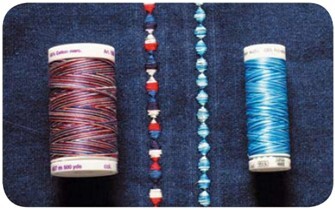
Threads for fantasy stitches can have degrade effects (several colors, in the photo - left) or ombre (with color transitions from dark to light, in the photo - right).
Reading Labels on Coils
The coils contain some information:
- firstly, the brand and name of the thread are indicated on the top side of the spool
- on the bottom side of the spool, you can see the composition (100% polyester) and number, length (in meters and yards, here it is 100 m – 547 yards), thread thickness, and finally the color code number.
Sometimes the country of manufacture is indicated on the reel.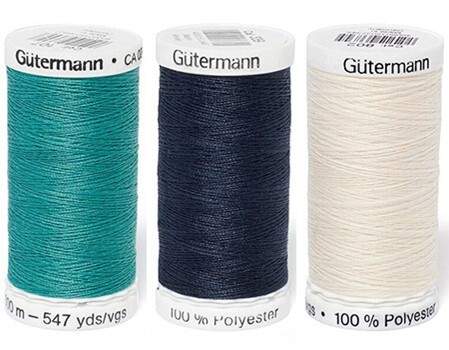
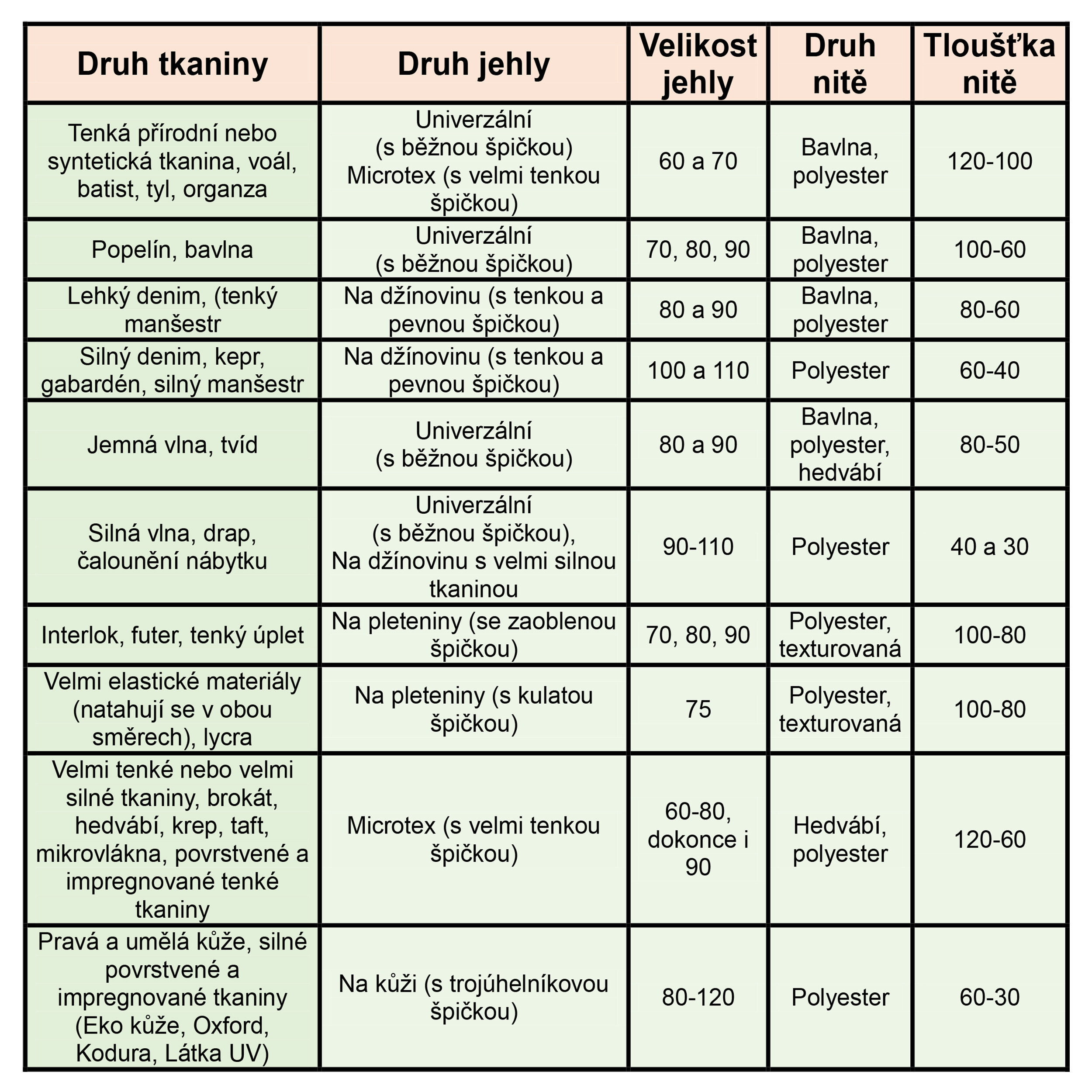
Summary Table shows the types and sizes of needles and threads recommended for the selected fabric.
 Threads can be stored and used on various media: bobbin, spool, mini-cone, or cone.
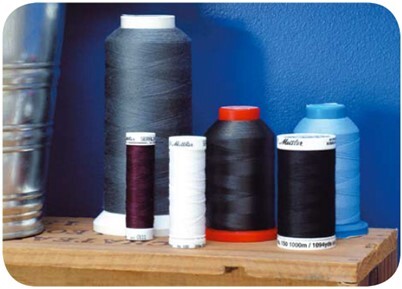
Threads on Various Carriers
And what about threads for the bobbin? In most cases, it is recommended to use a polyester thread that matches the color of the top thread or a neutral color (light or dark depending on the fabric), but finer than the top thread for cleaner and stronger stitching. When embroidering, replace regular polyester bobbin threads with special bobbin threads designed for embroidery machines.
How to Choose Thread Color?
Always choose a thread slightly darker than the fabric. If you are using printed fabric with a multicolored pattern, use threads in the dominant color or the darkest color present.
/logo_placeholder.svg)
/search_thin.svg)
/user.svg)
/cart.svg)
/benefit_tag.svg)
/benefit_truck.svg)
/benefit_phone.svg)
/benefit_box.svg)