Properties and Characteristics
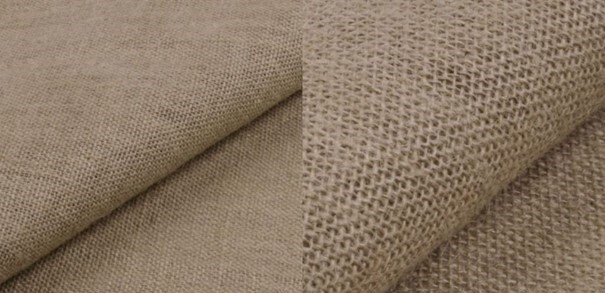
Jute fibers have long been used for technical purposes, in sewing work clothes, and packaging. Thanks to the texture of the canvases, jute has recently been widely used in interior design, accessory production, and even in the fashion industry. To understand what jute is, what kind of material it is, a description and its properties, along with recommendations for use and care, will help you.
What is jute made from?
In terms of popularity, jute fibers are no less than linen and cotton. Their low price and availability are due to the high yield of the plant, which is the raw material for obtaining the coarse strong thread.
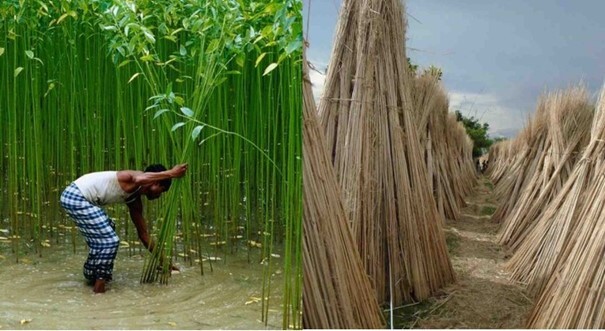
Most consumers have no idea what coarse jute fiber is made of. It is a natural material that differs from cotton and linen in its growing conditions.
Jute (Corchorus) is a heat- and moisture-loving annual herb from the Malvaceae family. A humid tropical climate is suitable for its cultivation, making Bangladesh and India leaders in the jute industry. Culture is cultivated in China and countries of Asia, Africa, and Australia. Another name for jute is Calcutta hemp.
The plant is composed of fibers such as lignin and cellulose. This combination led to the presence of the properties of fabric and wood in jute canvases simultaneously. In common speech, the material was called hessian or burlap.
During the production phase, oil solutions (castor oil) are used to soften the fibers, so the products made from them have a specific odor, which is removed by airing.
Jute is used in bookbinding. Few people know that when the fibers decompose, they emit a vanilla aroma. You can feel it when you pick up an old book.
Appearance – Description
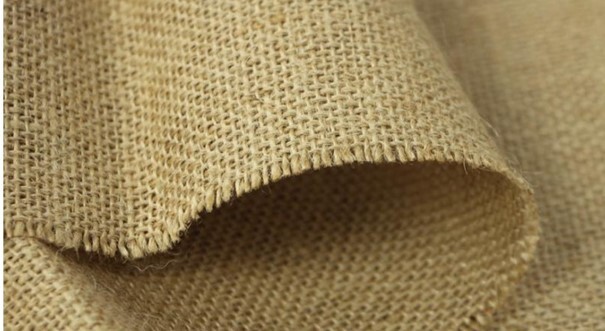
Jute fabric is made with a plain weave, which explains the high strength of the material. The canvas feels rough, unpleasant, prickly to the touch. Despite the fact that the fiber is heavier than linen and cotton, the fabric is light with gaps between the threads.
Upon close examination of the enlarged photograph, you can see the heterogeneity of the fibers. The thread can be polished and raw (slightly "fuzzy"). Sometimes there are small specks that can be easily removed.
The color of high-quality fiber is sandy or golden. Gray-green shades indicate low-quality raw materials. This selection rule applies not only to fabrics but also to ropes and twines.
Characteristics
The properties of jute fiber materials are demonstrated by the characteristics listed in the table below:
| Characteristics | Indicators |
| Origin | Plant-based |
| Fiber composition | Lysine – resin, main component of wood, cellulose |
| Environmental friendliness | High. Does not release toxins during combustion |
| Strength | High due to lysine content, which exhibits compressive strength similar to concrete |
| Binding | Simple |
| Hygroscopicity | Low. Actively absorbs moisture without it penetrating inside the product |
| Thermal conductivity | Low. Carpets and rugs made from jute reliably protect against the cold. Due to their low thermal conductivity, fibers are used for insulation production. |
| Fabric shrinkage | Negligible |
| Resistance to dirt | Repels dust and dirt |
| Antistaticity | Does not accumulate static electricity |
| Density, g/m2 | 190–420 |
| Flexibility | Missing |
| Decorativeness | The texture of the fiber perfectly fits into the interior |
| Sewing conditions | Easy to cut and sew, the edge is loose – requires finishing |
Fabrics dry slowly due to high moisture absorbency. The material is suitable for dyeing. The coarse fabric requires additional processing. Threads are unstable against UV radiation, susceptible to damage by bacteria, and easily flammable.
Therefore, the material undergoes a final processing phase using special impregnations. To reduce stiffness, cotton and linen threads are added to the textile material. For decoration – synthetic fibers, lurex. Some types of fabrics are laminated.
Production
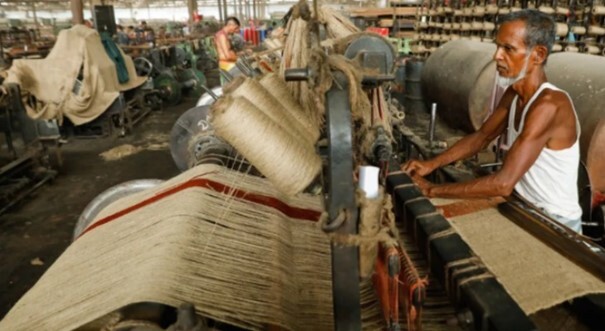
The geography of production is directly related to the climatic conditions necessary for growing Corchorus crops. In the Soviet Union, jute was cultivated in some parts of Central Asia. In India, there are areas where raw material production is the only source of income.
Shrubs and subshrubs reach a height of 3 m, their growth will take 4 to 5 months. The collection and preparation of raw materials is a labor-intensive process. The harvest is done by hand, tied into sheaves, and the cut stalks are left in the field for 3 days.
During this time, the leaves fall off and the bundles are soaked for 5 to 15 days in water tanks to destroy the connecting plates and facilitate the separation of the fibers. The next step is to thoroughly wash and dry the ingredient. The jute is then sent for processing.
The raw material prepared in this way goes through several stages in a textile company before it becomes canvas:
- Releasing stems in the bundle press.
- Softening with oil solutions.
- Removal of lumps and softening in the grinder.
- Peeling the raw material.
- Haul in tape machines, obtaining fibrous tape.
- Processing in wool spinning.
- Creation of yarn skeins.
- Transfer of raw material to weaving machines. Weaving.
- Fabric processing (lamination, dyeing, impregnation)
Types
Textile production offers processed jute fabrics, varying in properties – density, method of treatment. They are used for the production of clothing and accessories, as well as interior fabrics (upholstery, curtains, tablecloths, napkins).
Knitting enthusiasts know jute yarn. It is used in macramé technique. Garments from such yarn are not knitted. They become heavy and rough.
In addition, jute is used to produce other types:
Sealing used in the construction of wooden houses: oakum, felt, flax-jute (in a ratio of 20:80 and 50:50). The density of the insulation ranges from 460 to 600 g/m2.
Technical perspective – coarse fabric for the production of packaging, bags.
It is used in construction, manufacturing machinery, as a covering material, and as a raw material for composite mixtures.
Ropes and cords. Treated with special impregnations to increase strength.
Advantages and Disadvantages
The advantages of jute fibers include:
- environmental friendliness of the material;
- high strength;
- moderate shrinkage;
- lack of elasticity;
- ability to repel dirt;
- vapor permeability;
- water resistance (does not allow water into the product);
- color fastness (in dyed fabrics);
- dimensional stability due to fiber structure
Among the disadvantages worth mentioning:
- canvases are attractive to rodents and insects;
- actively absorbs moisture, releases it slowly;
- lack of elasticity;
- rough surface.
Usage
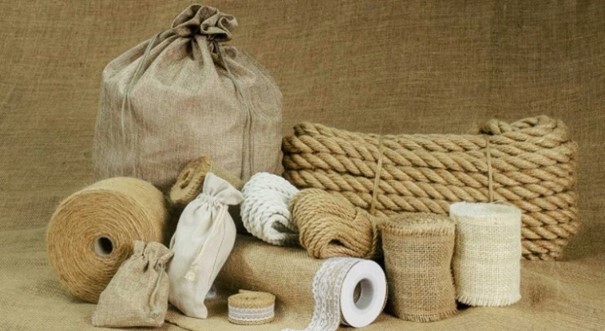
Products made from plant fibers are widely used in various fields. In areas of growth, some parts of the shrub are considered edible. Threads are also used in medicine.
If a few decades ago consumers knew hemp in the form of ropes, cords, and as a raw material for bags, tarps, and building insulation, today these boundaries have expanded.
From a technical, auxiliary material, jute has entered the realm of the fashion industry. The naturalness of the color and texture of canvases is used in the creation of design items: clothing and footwear models, bags, accessories, home textiles, and other things.
Jute is used in the production of:
- Packaging items;
- Wallpapers;
- Sealants and thermal insulation in construction;
- Design interior items: curtains, blinds, rugs, loungers, and other products in country, Provence, Ethno style;
- Auxiliary materials for furniture production (mattresses, pillows, covers);
- Composite polymers;
- Clothing;
- Footwear;
- Fabrics for embroidery, props, and decorations.
Thermal Insulation
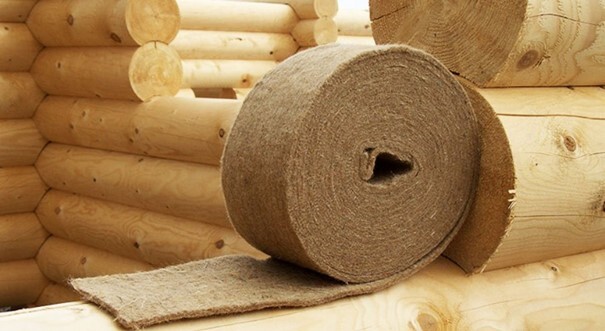
Jute fiber has been traditionally used to insulate walls and openings against drafts. The material is dense, moisture-resistant, windproof, and evenly fills the gaps. Jute has a unique ability to self-compaction.
Insulation helps control the humidity level inside the room.
Jute felt tape is produced by the needling method. Its width is 10 – 15 – 20 cm. The tow is supplied in bales. The lifespan of building materials is at least 75 years.
Packaging
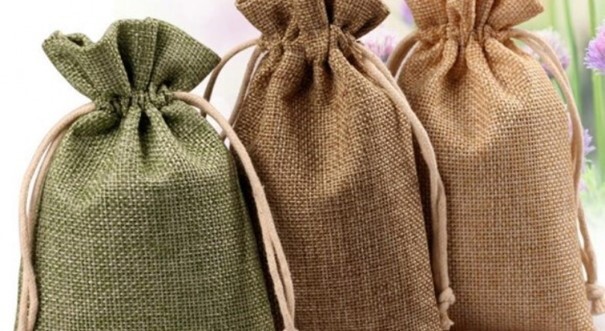
The use of tow as a packaging material is due to the low cost of the raw material (due to the high yield of the crop) and low hygroscopicity. By accumulating moisture from the outside, the contents remain dry.
Jute bags are used for the transportation and storage of natural textile fibers.
Furniture
When manufacturing furniture, dense fibers are used, which are characterized by increased strength and durability. They are used to make upholstery and covers. Koudel is used for decorating parts.
Carpets
Jute is also used in the production of carpets. It can serve as a base or woolen surface material (natural or combined with artificial and synthetic threads). Advantage of the carpet: optimal stiffness that prevents slipping on the floor; environmental friendliness; originality.
Ropemaking and Ropes
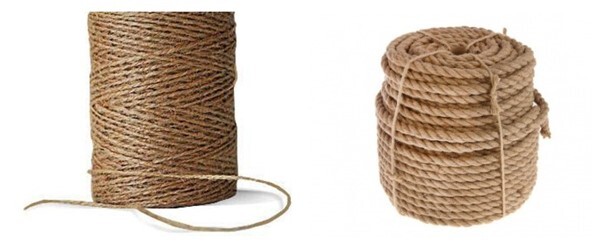
Ropes and cords are used for their intended purpose and for decoration or making braided products. Rugs are woven from string, beach bags are made, garden furniture elements, loungers, swings.
With twine, rope, and string, they adorn handmade products. The bag elements are made from them: wicker handles, fringes.
Yarn for Handicrafts
Yarn made from tow is not used for knitting garments due to its lack of elasticity. Threads are used for making souvenirs, accessories, and knitting bags using the macramé technique.
Craft experts create burlap panels, decorating them with ribbons, beads, and other elements. Interior dolls and amulets are made from thick thread that holds its shape.
Filigree
Yarn is used for knitting filigrees. This type requires skill and artistry, but the final result is worth it. The filigree made of tow looks beautiful. Knitting resembles jewelry patterns.
Care
Caring for jute fabrics is easy. Thanks to their ability to repel dirt, they do not require frequent cleaning.
Important! Do not wash bags, curtains, throws, and other items in the washing machine. During water absorption, the material hardens and is capable of putting appliances out of operation.
It is not recommended to use powdered detergents for washing, as they clog the gaps between the fibers. Pre-soak the product. After washing, dry in a straightened form in a well-ventilated area.
Thick covers, baskets, bags, hats, cases, and other products cannot be washed! They can be wiped with a damp cloth or cleaned chemically.
/logo_placeholder.svg)
/search_thin.svg)
/user.svg)
/cart.svg)
/benefit_tag.svg)
/benefit_truck.svg)
/benefit_phone.svg)
/benefit_box.svg)