How Eco-leather Differs from Natural, Artificial Leather, and Leatherette, Range of Use and Care
The time has come for new technologies, thanks to which artificial materials have ceased to be of poor quality and short-lived. This is confirmed by eco-leather, which in its properties is not inferior to natural material, does not crack, does not harm animals or the environment, and looks amazing.
So let's understand what kind of material eco-leather is and whether it is genuine leather or not?
Content
General Information about the Material
Eco-leather – what kind of leather is it?
What is the difference between eco-leather and faux leather?
What is the difference between leather and eco-leather?
Eco-leather: pros and cons:
- Benefits
- Disadvantages
Scope of Application
Caring for Eco-Leather or How to Clean Eco-Leather?
Types of Eco-leather:
- Microfiber
- PU
- PVC
-Perforated eco-leather
- Self-adhesive
- Stretch eco-leather
What type of leather is the best
General Information About the Material
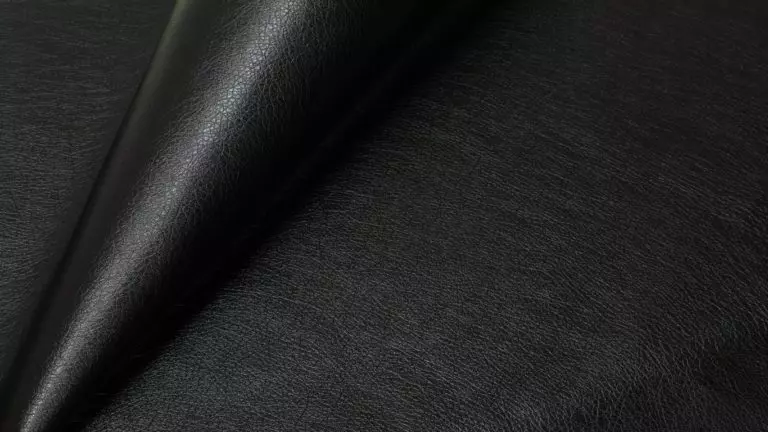
Genuine leather is a unique, flexible, durable, and elastic material.
It has been used since ancient times. People have always appreciated the protective qualities of genuine leather, making clothing, shoes, wrapping books, crafting bags, and even making protective armor for combat.
Many years and centuries ago, natural fabric was an expensive material, and not everyone can afford it in our time. That is why such an economical artificial material as eco was invented.
For the first time, the material from eco-leather was introduced by American scientists in 1963, and a year later, China launched a similar technology on the market.
Eco-leather – what kind of leather is it?
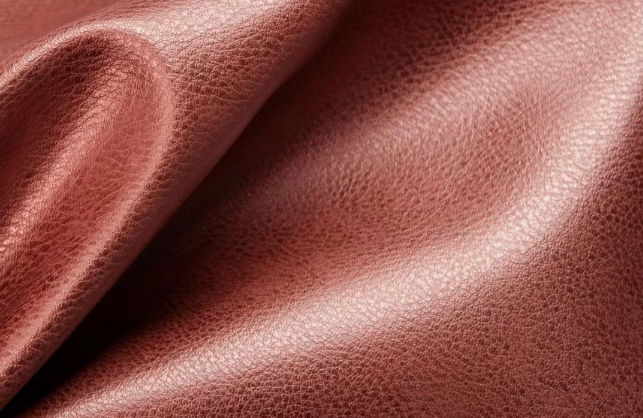
What is the difference between eco-leather and faux leather?
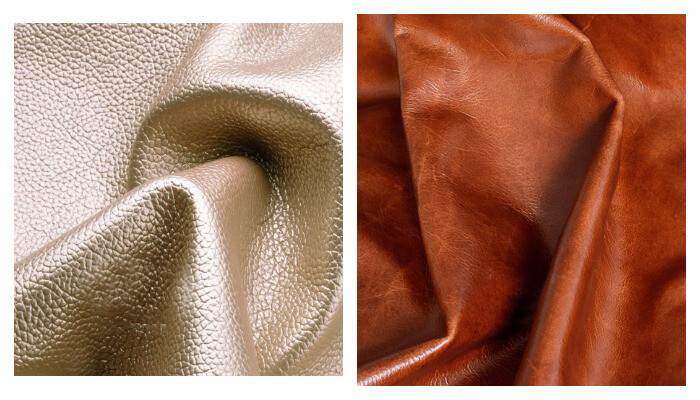
Few people know how eco-leather differs from artificial leather, as they are completely different materials. And what are the properties of these two materials.
- Production technology. The basis of both these materials is fabric or synthetic fabric. However, leatherette is covered with a film coating layer, often polyvinyl chloride (PVC), and leatherette is covered with polyurethane.
- Eco-leather and faux leather have low durability, so they do not last more than 1-2 years.
- Leatherette does not allow air to pass through, whereas eco is a breathable material.
- Both materials do not absorb or transmit moisture.
- Considering both options as furniture upholstery, leatherette is cold and uncomfortable on the body, whereas, unlike the other, it is pleasant and not cold to sit on eco-leather.
- Faux leather is much rougher and more unpleasant to the touch than the other one.
- Faux leather can cause allergic reactions upon contact with the skin, unlike eco-leather.
Signs of differences between eco-leather and faux leather:
Touch Method
You need to take a sample of the material and gently squeeze it in your palm. Warmth, softness, and velvet will only be felt in eco-leather. The surface of faux leather, made of PVC, resembles plastic objects upon contact.
Chemical Method
Plant oil will help to more accurately determine the species. It must be dripped onto the surface and left for a day. The material that shows no traces because the oil is completely absorbed is eco-leather. Faux leather under the influence of oil will become increasingly hard and coarse as its components begin to break down.
What is the difference between leather and eco-leather
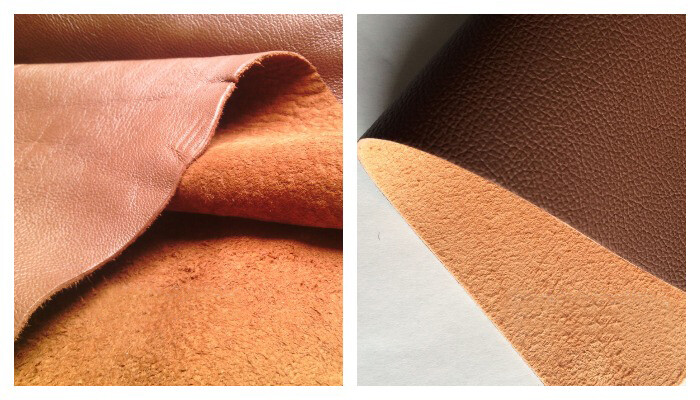
Many people ask themselves when buying clothes or shoes: "What kind of leather is eco-leather and how can it be distinguished from natural leather?"". Even for an inexperienced person, it is quite easy to understand how to distinguish leather from eco-leather.
- As mentioned earlier, eco material is made from polyurethane, while natural material is made from pre-treated animal skin. And so natural leather is woolen on the inside, while eco-leather is textile.
- If you compare these materials as furniture upholstery, in this case, before distinguishing eco-leather from genuine leather, you should know that if you sit on natural leather, the body will start to sweat over time, whereas with eco-leather, it's the opposite – it's pleasant to sit on.
- For some people, natural material can cause an allergic skin reaction, whereas synthetic material is hypoallergenic and therefore does not cause any irritation.
- Eco-leather has no characteristic odor.
- Compared to genuine leather, eco-leather has better color quality and color fastness.
- Eco-leather is lighter.
- How to distinguish leather from eco-leather on a jacket? You should know that artificial material is much more pleasant to the touch than natural, because natural material is in most cases covered with an acrylic emulsion, which causes the material to become rough.
- Natural, as opposed to synthetic, has poor breathability due to the same acrylic emulsion.
- The disadvantage of eco-leather compared to genuine leather is its low strength. Natural material, with proper care, can last for many years, unlike the other type of fabric.
- Leather or eco-leather have a rather aesthetic appearance, and if the latter material is properly processed, it will be quite difficult to distinguish it from natural leather.
If answering the question, which is better, leather or eco-leather? In this case, the answer will not be straightforward because both materials have many positive and negative properties.
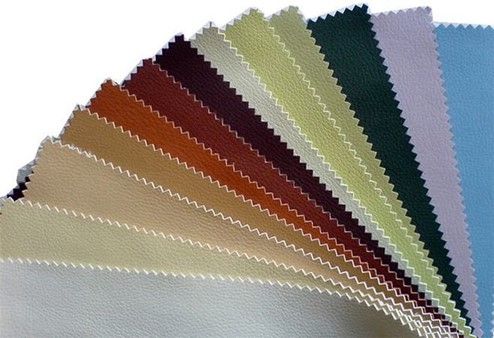
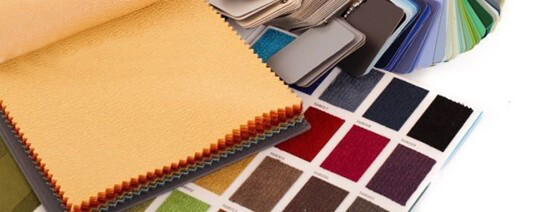
Eco-leather in the photo:
Eco-leather: Pros and Cons
Like any material, this one also has its disadvantages and advantages that everyone should be aware of when purchasing items or shoes made from this fabric.
Advantages
Eco-leather impresses with the following features:
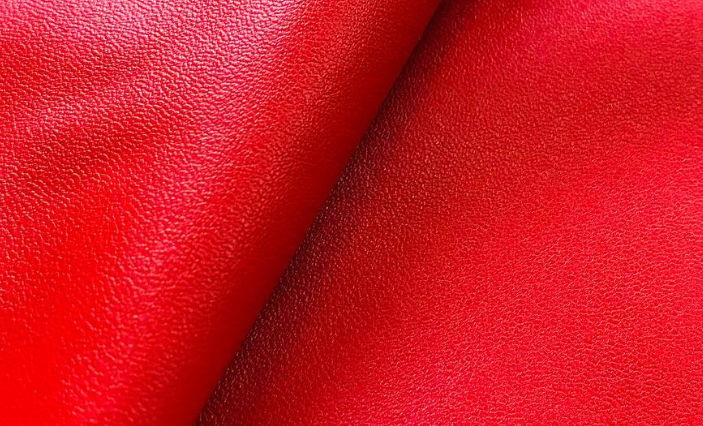
Exact imitation of the texture and properties of genuine leather. In appearance, eco fabric is very similar to natural fabric, and in some cases, a person without experience in this area may not even recognize the counterfeit.
- Perfectly breathable, and this is one of its most important advantages, because when purchasing products made from this type of fabric, one wants to feel comfortable and at ease. Ensures air and water vapor permeability.
- It is pleasant and soft to the touch.
- It is non-allergenic, therefore it is recommended for people suffering from various types of allergic reactions.
- Flexibility and suppleness.
- Tensile strength of the material.
- Easy care and cleaning.
- Has no foreign odors.
- The material is environmentally friendly.
- Humanity and no costs for animal breeding.
- This synthetic material is often used to make bags and shoes, not to mention clothing. Because the fabric allows for a wide range of design solutions, which cannot be said about natural material that has a coarser texture.
Disadvantages
- Not as strong frost resistance as, for example, natural leather.
- Increased wear. With regular washing, the fabric begins to deteriorate and cracks appear on it. Easily tears and gets damaged.
- Upholstery of furniture made from eco-leather is quickly damaged by cats.
- In case of accidental damage, the underside of the fabric will be visible, specifically the cotton base, which cannot be patched or hidden.
- Another disadvantage is prestige. Purchasing genuine leather products makes people feel more prestigious, which cannot be said about eco-leather. In recent years, however, eco-leather has been in high demand among all famous world fashion designers, so based on that, it's hard to call it a downside, but everyone's opinions differ.
Scope of Use
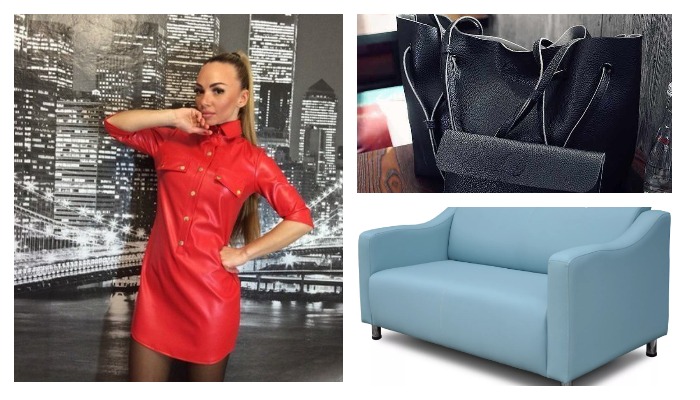
The analogue of genuine leather is widely used in the fields of tailoring, haberdashery, and the footwear industry. It is often used for furniture upholstery and in the production of car interior covers. The high demand is explained by the representative appearance, affordable price, and easy maintenance.
From eco-leather you will find:
- jackets and raincoats, skirts and leggings;
- bags, backpacks, and wallets;
- various types of covers;
- shoes for children and adults from sandals to boots;
- gloves and belts;
- upholstery for armchairs, chairs, and sofas;
- decorative items in the interior.
Eco-leather is combined with various fabrics and materials. This may include fittings, lace, ruffles, appliqués, and perforations.
Eco-leather allows for embossing or image application, which is why it is used in the souvenir industry.
Caring for Eco-Leather or How to Clean Eco-Leather?
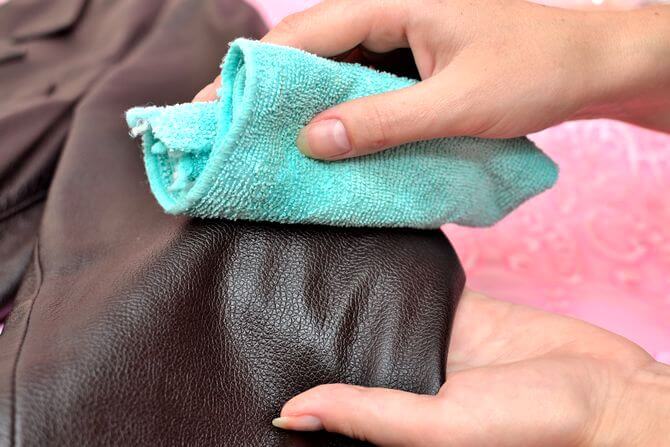
With proper care and strict adherence to the manufacturer's recommendations, eco-leather products last longer.
Few people know how to clean eco-leather and how to take care of it. Eco-leather is a very temperamental material and, as consumer reviews have shown, it is quite difficult to care for. Under no circumstances should you wash this material, as washing, especially in an automatic washing machine, may cause creases or, even worse, cracks to appear on the fabric.
If a stain appears on the surface, you can remove it with a regular damp cloth.
If the impurities are not removed in this way, then washing is possible at a maximum temperature of 30 degrees exclusively by hand. When washing, it is not recommended to use washing powders; in this situation, it is better to opt for washing gels or soap. Heavily soiled garments should preferably be cleaned in a dry cleaner, as this will not damage them as much as washing in a drum washing machine.
Upholstered furniture made of eco-leather does not tolerate scratches from animal claws, as it will lose its appearance and consequently need to be replaced. If there are pets in the house, the first thing you need to do before purchasing this type of furniture is to carefully consider which material is better for it.
To remove dust and light dirt, it is recommended to use microfiber cloths, pre-moistened with water and carefully wrung out. Then the surface is wiped dry.
It is not recommended to use hard brushes for cleaning, as they can damage the outer, decorative layer.
Eco-leather should not be kept under sunlight and near heat sources.
After soaking, wipe dry and let it air dry naturally.
Attention! Eco-leather is afraid of products containing chlorine.
Treatment products and creams are the same as for natural leather. Excess material is removed from the surface with a soft cloth, as it does not have absorbent properties.
Eco-leather can be washed with cold water, but only with baby or laundry soap.
For cleaning and stain removal, it is allowed to use ammonia, lemon, hydrogen peroxide on light products, and products for genuine leather. You can use a solution of medical alcohol diluted to a concentration of 50%.
Any drops of products that fall on eco-leather must be immediately dried. Treat sticky mixtures with a damp cloth until they disappear. Finally, wipe with a dry cloth.
Upholstery furniture and shoes made of eco-leather are recommended to be protected with impregnations for genuine leather. This way, you will preserve the original appearance and cleanliness for a longer time.
The product can be cleaned in a dry cleaner.
Types of Eco-leather
Microfiber
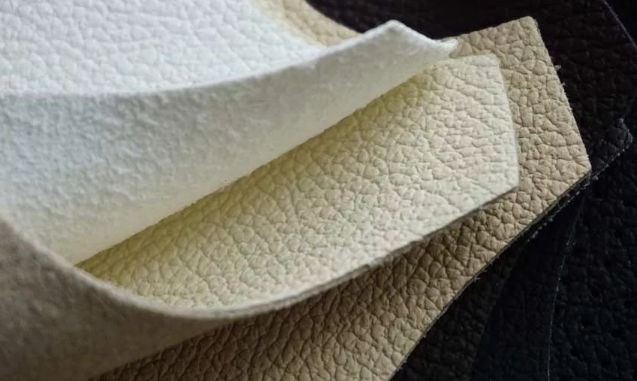
Polyester-coated fibers are used as the base. The material is lightweight and has a porous structure. It has moisture-repellent properties and ensures air access.
PU
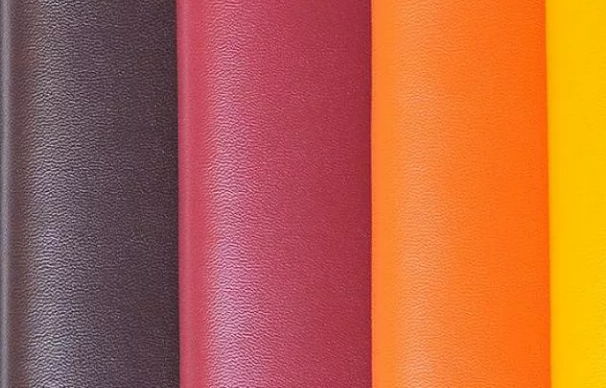
PU leather – it is a canvas with the properties of natural leather, which is not inferior in terms of quality. It consists of three layers, including cotton fabric, discarded genuine leather, and a thin, high-quality polyurethane cover layer. The structure ensures strength, air permeability, and frost resistance.
PVC
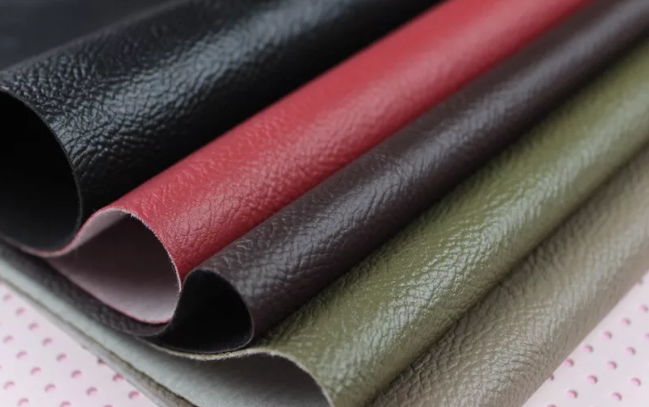
The most represented group of faux leathers. Dense and elastic, porous and rigid canvas is produced. It is manufactured by impregnating a fibrous base with polymer compositions and applying a layer of PVC. The properties of the resulting materials depend on the base used and the type of polymer.
Perforated Eco-leather
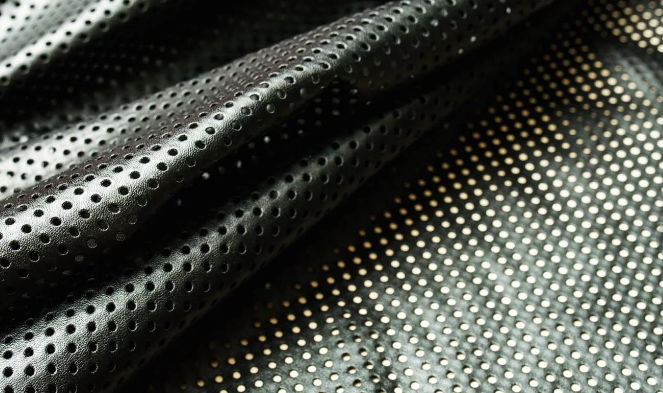
You can immediately recognize it by the small holes that form a pattern on the canvas. It is used in decorations and products where ventilation is necessary.
Self-adhesive
It has an adhesive base that provides strength and increases the thickness of the material.
Stretch Eco-Leather
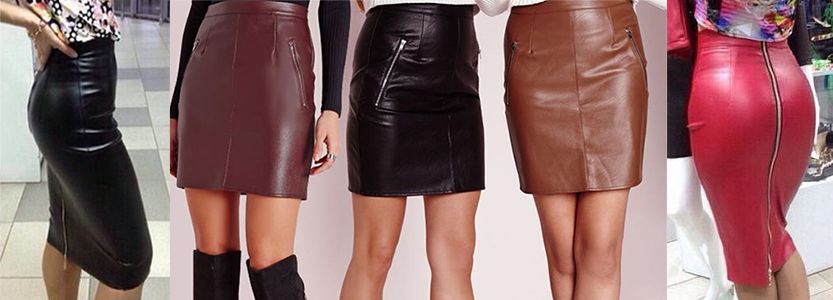
Stretch leather holds a strong position in the fashion industry market. It appears in collections of fashion designers who like to use it for fitted dresses and skirts, pants and leggings, as well as in decorative elements and accessories. Why and what is stretch leather.
It is a thin and elastic material that stretches without cracking or damage.
It consists of multiple layers, with a base of cotton fabric onto which a polymer coating is applied on both sides. The textile layer may contain an addition of elastane, polyacrylate, or polyamide. The artificial knitted base gives the stretch leather the ability to stretch up to 30%.
The surface of the material captivates with its smoothness and lacquer shine. The canvas is also made with a matte front side.
Stretch leather is used for making garments, handbags, coats, suits, and shoes.
The products fit closely to the body, highlighting the dignity of the figure and sexuality.
The most popular material is in black, even though it is available in a rich palette.
Modern technology allows for the creation of natural stretch leather by combining a layer of thin sheepskin with a cotton textile backing. The material is high quality and durable, with the ability to stretch by 20%. Looks attractive.
What Kind of Leather is Best
Eco-leather products match natural ones in terms of appearance and wear resistance. These are two equally high-quality types of goods at approximately the same price. The advantage of eco-leather is that it is waterproof.
Eco-leather versus artificial leather. Eco-leather is more flexible, pleasant to the touch, and resistant to natural factors. Such materials have different structures. The advantage in quality is not on the side of faux leather at all. It is rough, does not let air through, and sometimes cracks in the frost.
The only downside is that eco-leather is sensitive to mechanical damage.
We hope that we have fully answered all your questions regarding eco-leather, including what kind of material it is. In summary, we would like to say that items, bags, and shoes made from eco-leather have their pros and cons. This material is soft and pleasant to the touch, breathable, eco-friendly, and much cheaper than genuine leather. Based on these properties, it is understandable why eco-leather has become so popular in the market in recent years.
/logo_placeholder.svg)
/search_thin.svg)
/user.svg)
/cart.svg)


/benefit_tag.svg)
/benefit_truck.svg)
/benefit_phone.svg)
/benefit_box.svg)